Algorithms in SEO: From Google Updates to Problem-Solving Logic
Introduction
Search Engine Optimization (SEO) has evolved far beyond keywords and backlinks. Today, it is deeply driven by algorithms systems designed to evaluate, rank, and deliver the most relevant content to users. Every time someone types a query into a search engine, complex algorithms work in the background to decide which pages deserve visibility.
Understanding these algorithms is no longer optional for digital marketers and content creators. It is essential.
In this blog, we’ll explore two important dimensions of SEO:
- Google’s ranking algorithms that directly influence search results
- Core algorithmic approaches from computer science that shape strategic thinking
By connecting these two, you’ll gain a deeper understanding of how SEO really works in the real world.
1. Google’s SEO Algorithms

Helpful Content Update
Google’s Helpful Content Update represents a major shift toward people-first content. Instead of rewarding content that is created purely to rank, this algorithm prioritizes content that genuinely helps users.
The core idea is simple:
Content should provide real value, answer questions clearly, and reflect authentic expertise.
This update evaluates several important factors:
- Originality of the content
- Depth and completeness of information
- Relevance to user intent
- Evidence of real experience or expertise
Websites that produce shallow, repetitive, or AI-generated content without value are more likely to lose rankings.
SEO Takeaway:
Focus on creating content that solves real problems. Write for humans first, and let search engines follow.
Page Rank
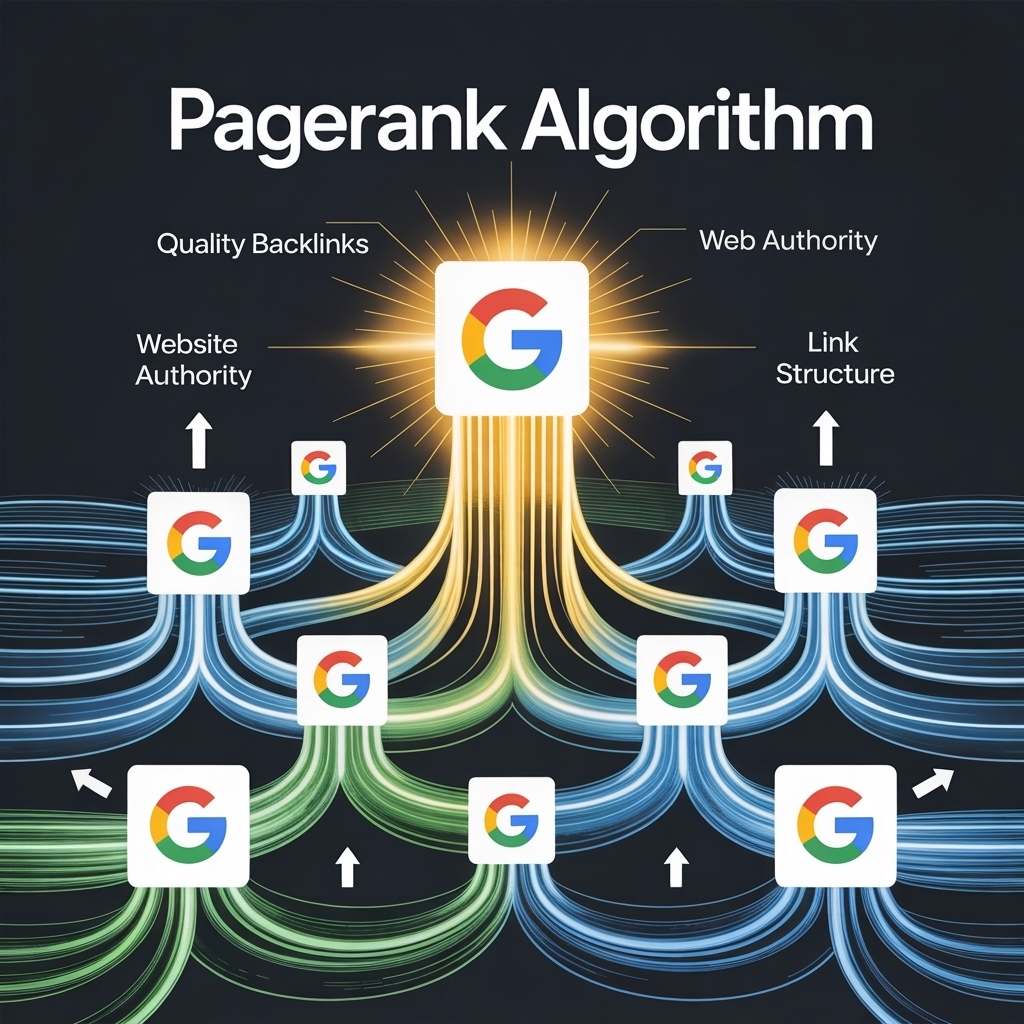
PageRank is one of Google’s foundational algorithms and still plays a significant role in determining website authority.
It works by analyzing backlinks links from one website to another. Each backlink acts like a “vote of trust.” However, not all votes are equal. Links from high-authority websites carry more weight than those from low-quality or irrelevant sources.
In simple terms:
- More high-quality backlinks = higher credibility
- Higher credibility = better chances of ranking
PageRank also considers the structure of links, meaning how pages are interconnected across the web.
SEO Takeaway:
Focus on building quality backlinks from relevant and authoritative sources rather than chasing large quantities of low value links.
Page Experience Update

The Page Experience Update emphasizes how users interact with your website. Google no longer looks only at content—it also measures how users feel while browsing your site.
Key factors include:
- Page loading speed
- Mobile responsiveness
- Core Web Vitals (like visual stability and interactivity)
- HTTPS security and safe browsing
If users find your site slow, confusing, or difficult to navigate, your rankings may suffer—even if your content is strong.
SEO Takeaway:
A smooth, fast, and user-friendly experience is essential. Good UX is no longer optional—it directly impacts SEO performance.
2. Core Algorithmic Concepts (with SEO Relevance)
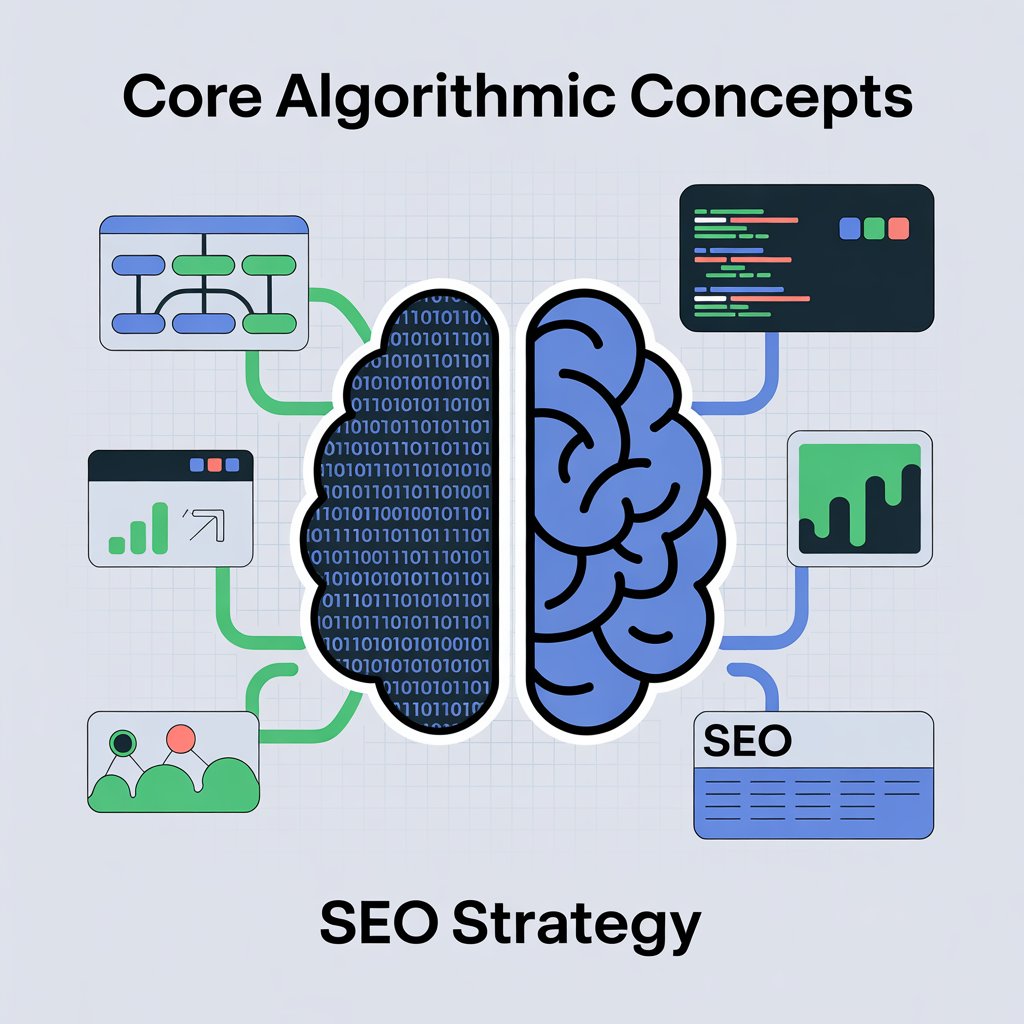
To truly understand SEO strategy, it helps to think like a problem solver. Many concepts from computer science algorithms can be directly applied to SEO decision-making.
Brute Force

Brute Force is the most basic approach to solving a problem—trying every possible solution until one works.
In SEO, this might look like:
- Testing multiple keywords without research
- Publishing large amounts of content without a clear strategy
While this approach can sometimes produce results, it is inefficient and time-consuming.
Limitation:
It lacks direction and scalability.
Divide & Conquer

Divide & Conquer involves breaking a complex problem into smaller, manageable parts.
In SEO, this translates to:
- Organizing content into categories and subcategories
- Creating keyword clusters instead of targeting random keywords
- Structuring websites into clear hierarchies
This approach improves clarity, organization, and scalability.
Benefit:
It allows you to build a strong and structured SEO strategy over time.
Greedy Algorithm
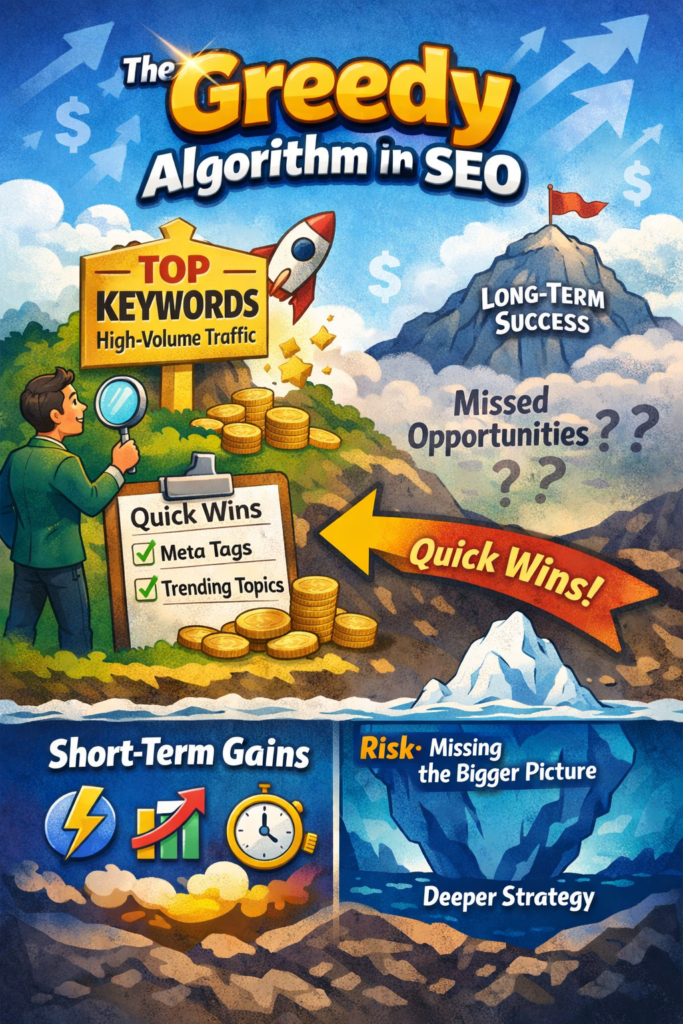
A Greedy Algorithm focuses on making the best immediate decision at each step, aiming for quick results.
In SEO, examples include:
- Targeting high-volume keywords for fast traffic
- Prioritizing quick-win optimizations like meta tags or trending topics
While this approach can deliver short-term gains, it may not always lead to long-term success.
Risk:
Focusing only on immediate results can overlook deeper strategic opportunities.
Dynamic Programming
Dynamic Programming is about solving complex problems by storing and reusing previous results.
In SEO, this can be applied by:
- Updating and improving existing high-performing content
- Repurposing blog posts into different formats (videos, infographics, etc.)
- Learning from past performance data
Instead of starting from scratch, you build on what already works.
Benefit:
Saves time, increases efficiency, and maximizes results.
Back tracking
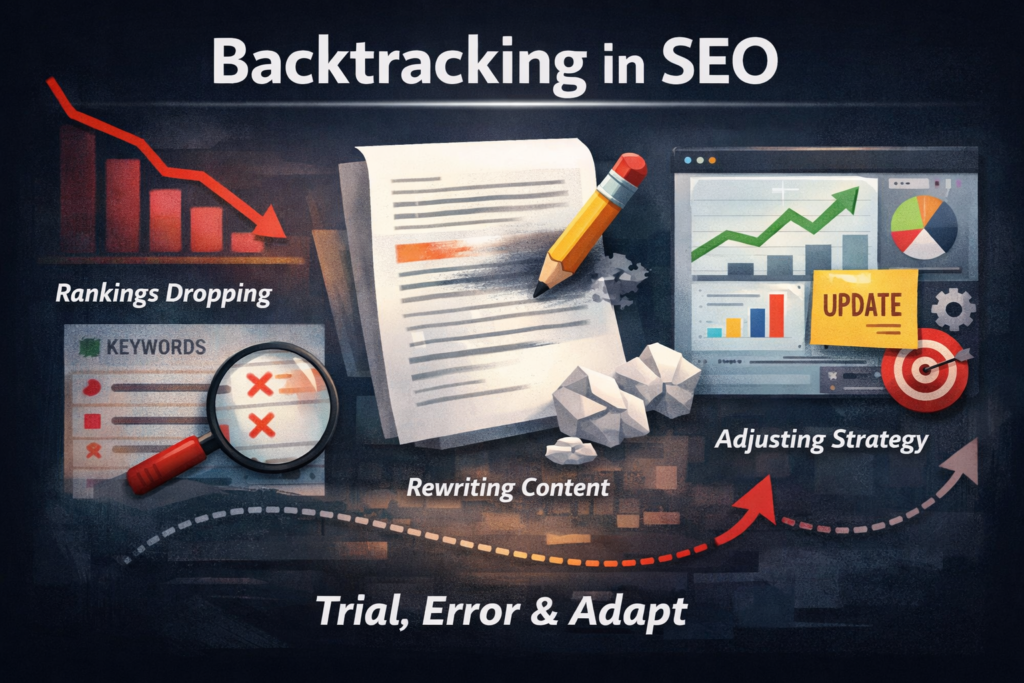
Backtracking involves trying a solution and reversing it if it doesn’t work.
In SEO, this is a common process:
- Changing keywords when rankings drop
- Rewriting content that isn’t performing
- Adjusting strategies based on analytics
SEO is not a one-time effort—it requires continuous refinement.
Benefit:
Encourages flexibility and improvement through iteration.
Randomized Algorithm
Randomized algorithms introduce controlled randomness to explore new possibilities.
In SEO, this can be seen in:
- A/B testing headlines, layouts, or CTAs
- Experimenting with different content styles
- Trying new platforms or formats
Not every experiment will succeed, but some can lead to unexpected breakthroughs.
Benefit:
Encourages innovation and discovery.
Recursive Algorithm
Recursion involves solving a problem by repeatedly applying the same process to smaller instances.
In SEO, this appears in:
- Internal linking strategies
- Topic clusters where main pages link to subtopics and vice versa
- Building content ecosystems
This creates a self-reinforcing structure that improves authority and crawlability.
Benefit:
Strengthens website architecture and long-term SEO performance.
3. How Everything Connects
Modern SEO is a combination of:
- Google’s ranking algorithms
- Logical problem-solving approaches
For example:
- PageRank + Divide & Conquer helps create a strong internal linking and content structure
- Helpful Content Update + Dynamic Programming ensures consistent, high-quality content that evolves over time
- Page Experience + Greedy Optimization can deliver quick improvements in usability and performance
When you combine technical understanding with strategic thinking, SEO becomes more than just execution—it becomes a system.
Conclusion
Understanding algorithms in SEO gives you a powerful advantage. It shifts your perspective from simply following trends to thinking critically and strategically.
SEO is no longer about guessing what works.
It’s about understanding why it works.
By combining:
- Knowledge of Google’s algorithms
- Principles of problem-solving logic
You can build smarter, more efficient, and future-proof SEO strategies.
In the end, success in SEO doesn’t come from doing more—it comes from thinking better.